Cape Arkona:
The northern tip of Rügen with its lighthouses
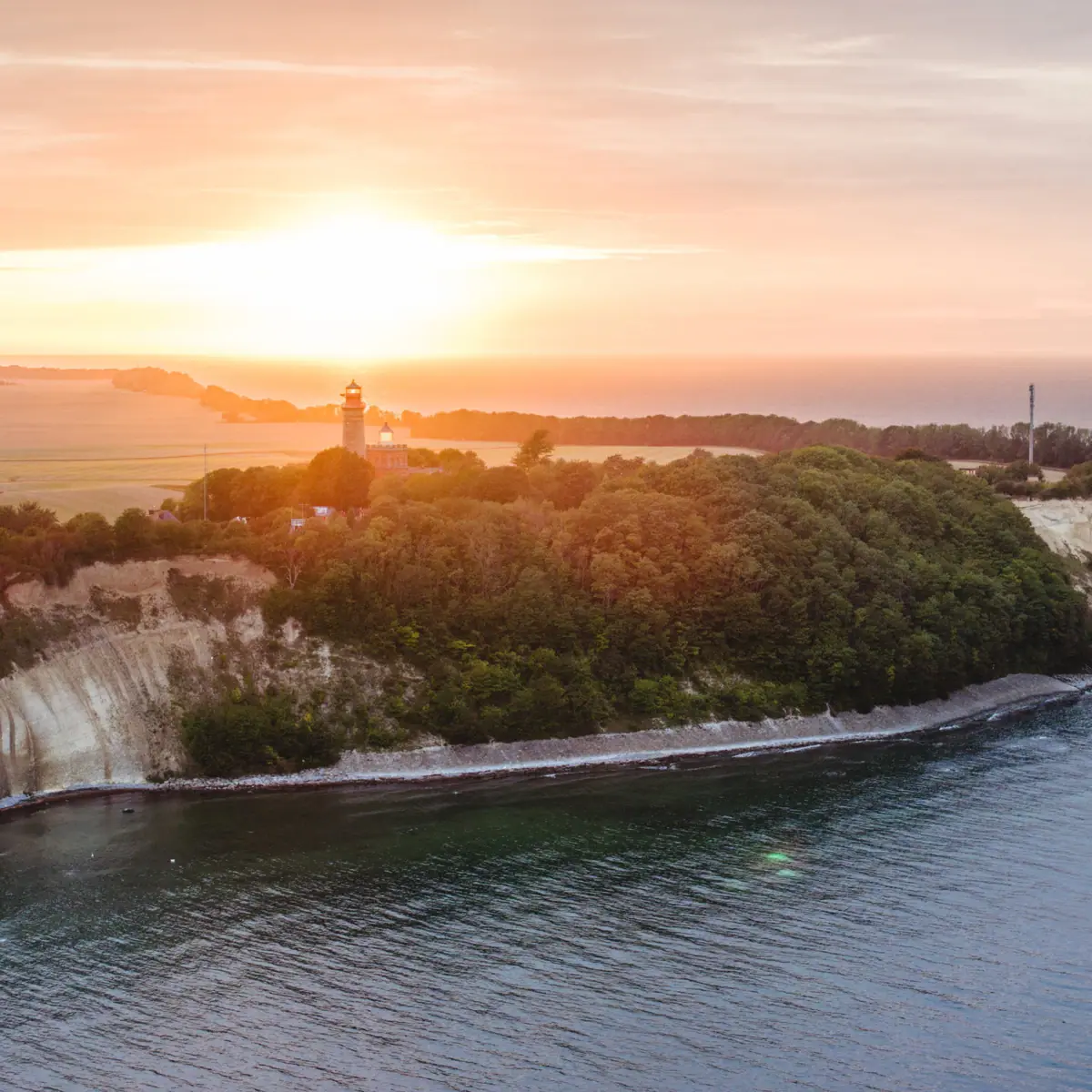
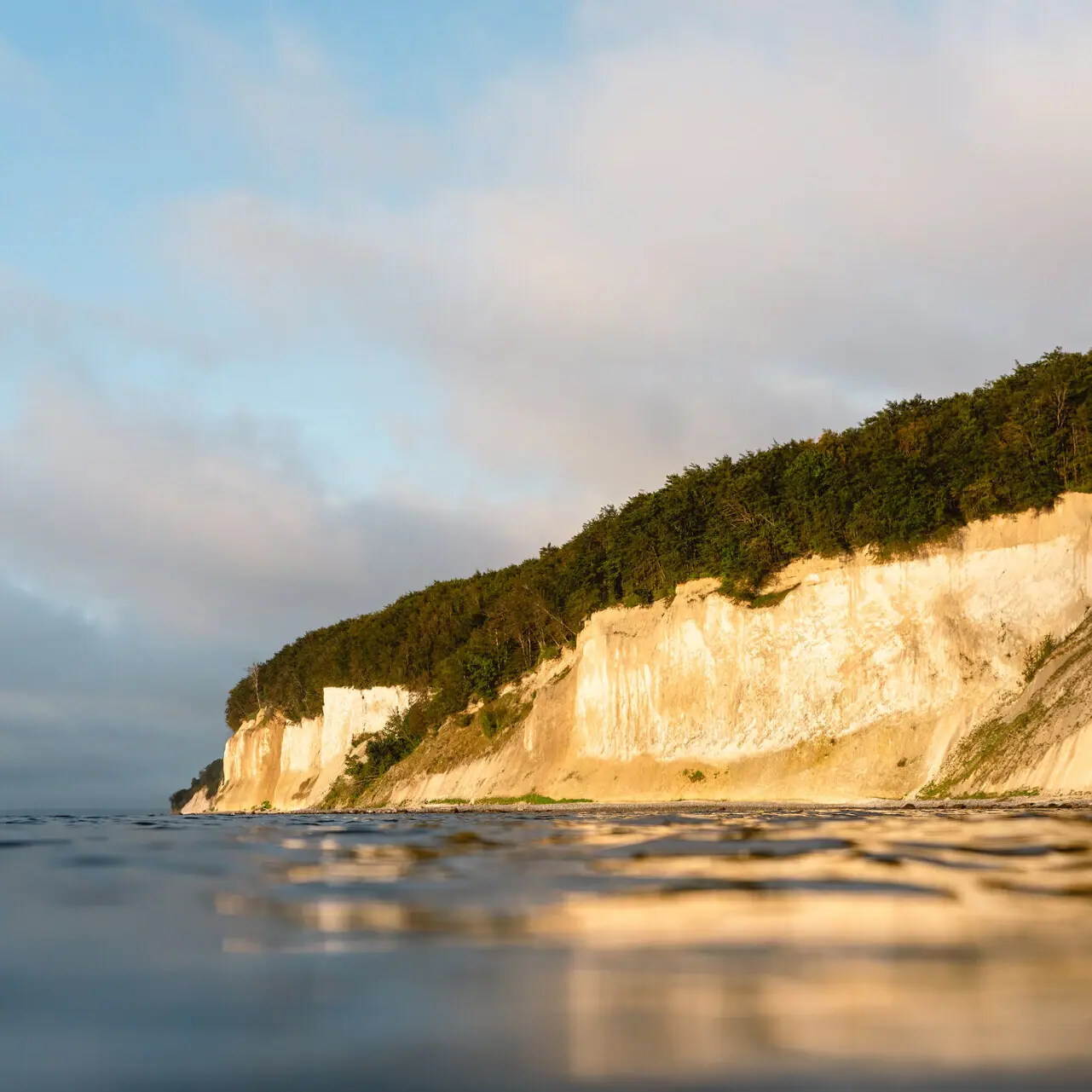
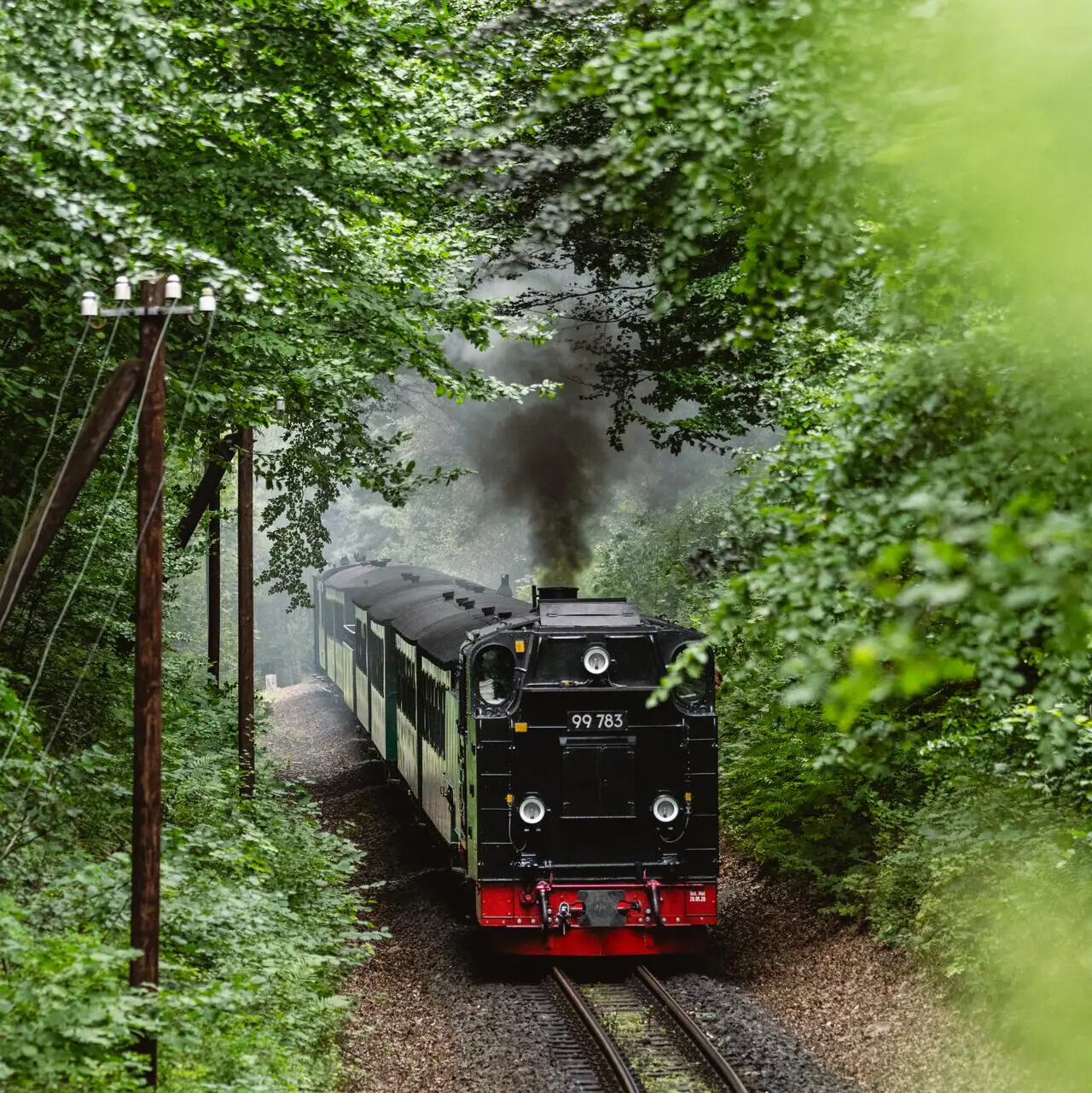
At the very top of Rügen, on the Wittow Peninsula, the cliffs rise some 45 metres above the Baltic Sea. This is Cape Arkona. Here you’ll find two lighthouses and a radio direction-finding tower, as well as an ancient Slavic fortification and a tiny fishing village. And the wind is free. Leave your car in Putgarten. You can cover the rest on foot or by the Kap Arkona Railway.

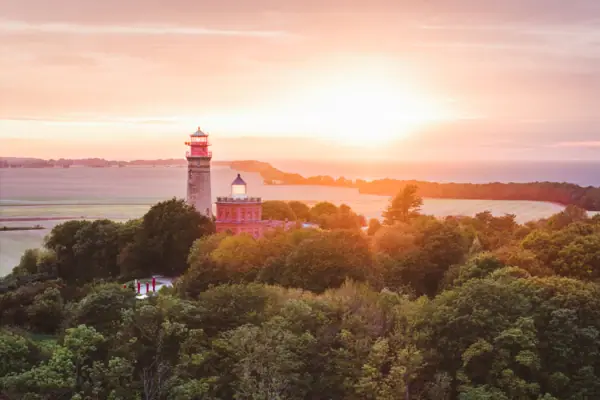
Arkona Cape Lighthouse and Schinkel Tower
The small, square brick tower is the Schinkel Tower. It was designed by Karl Friedrich Schinkel and first came into operation in 1828. This makes it the second-oldest lighthouse on the German Baltic coast, after Travemünde. You can come inside to get married or to visit the ‘200 Years of the Schinkel Tower’ exhibition.
In 1905, its larger neighbour took over: round, 35 metres high and still in service today. Every 17 seconds, it sends three flashes of light across the sea. There are 164 steps up to the viewing platform, and from the top you can see Hiddensee and, on a clear day, even the Danish island of Møn.
Kap Arkona Lighthouse Tower
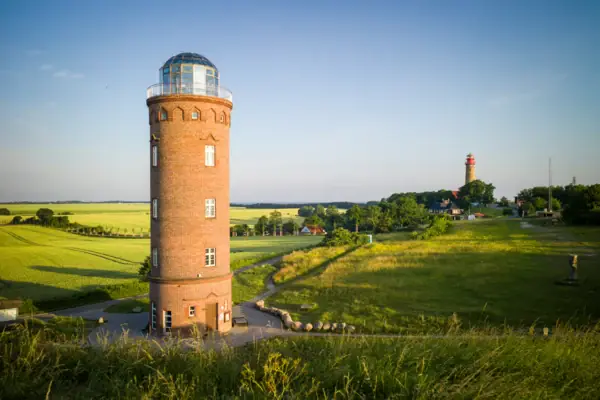
A view of the whole headland: The third tower in the group is the Peilturm. It stands slightly apart, right next to the ramparts of Jaromarsburg Castle. It was built in 1927 for military maritime radio communications and helped ships on the Baltic Sea to navigate.
Today, you climb 111 steps up to the platform 20 metres above ground level, past floors displaying arts and crafts, alpaca wool and artefacts from Jaromarsburg Castle. Beneath the glass dome, the entire headland lies before you: both lighthouses, the cliffs, the castle rampart and, in good weather, Hiddensee. And best of all: the Peilturm is also open in winter.
The fishing village of Vitt
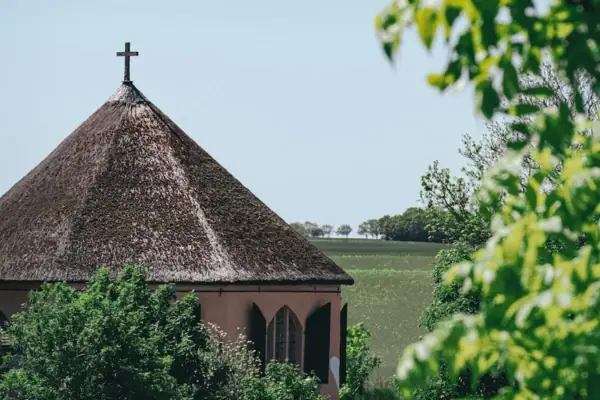
A short walk down to the water’s edge: Vitt lies about a kilometre from Putgarten. The fishing village is small, with thatched-roof houses, cobbled streets and an octagonal chapel on the waterfront. The path down is steep in places, so sturdy shoes are advisable.
At the little harbour, you can get fish rolls and smoked fish straight from the fishermen. If you get up early, you can watch the sunrise here with a view of the coast and the headland. The ‘Veilchentreppe’ (Violet Steps) lead down to the stony beach, where families love to hunt for fossils. The Kap Arkona Railway takes you back. Or you can walk along the cliff-top path on to the headland.
Frequently asked questions about
the Cape Arkona Rügen
Is Cape Arkona the northernmost point of Rügen?
Almost. The northernmost point is Gellort, about one kilometre to the north-west. That is also where the large boulder known as the Siebenschneiderstein is situated.
Can I drive right up to the lighthouse?
No, the area around the towers is car-free. You park in the main car park in Putgarten. From there, it’s about 2.5 kilometres on foot. If you don’t want to walk, take the Kap Arkona railway.
How much does it cost to park at Cape Arkona?
At the Putgarten main car park, you pay €9 for the whole day, and from 4 pm onwards, just €6. The first hour is free. At the Nordstrand car park, it costs €6 between 5 am and 11 pm. Please note: you are not allowed to park there at night.
How much does the Kap Arkona Railway cost?
A journey from the car park to the Cape or to Vitt costs €4 for adults and €2 for children. With the combined ticket, you can travel to the Cape and to Vitt for €6 (adults) or €3 (children). You can buy tickets at the ticket booth at the turning point or directly from the driver.
Can I get to Cape Arkona by bus as well?
Yes. Bus route 12 runs from Bergen, and route 13 from Sassnitz; both go as far as Putgarten.
How far is Cape Arkona on Rügen from the aja Hotel?
From your aja Resort, you can reach Cape Arkona in about 80 minutes by car. The journey takes you all the way along the island heading north – a brilliant route for enjoying Rügen’s varied landscape.
How much is the entrance fee at Cape Arkona?
Entry to the site itself is free. You only have to pay if you want to go up the tower. The lighthouse costs €3 per person. Admission to the observation tower is also €3; children aged 13 to 16 pay €2 and children aged 7 to 12 pay €1. The ‘200 Years of the Schinkel Tower’ exhibition is free of charge. (As of October 2026)
Is the Kap Arkona Card worth it?
With the card, you can visit the lighthouse, the radio beacon tower, the bunker museum and the maritime rescue exhibition free of charge. You’ll also get discounts at local partner venues. It costs €8 for adults and €4 for children. The family ticket for 2 adults and all children under 14 costs €20. You can buy it at the Tourist Information Centre by the car park or online:
When is the Kap Arkona lighthouse open?
From 1 April to 31 October, daily:
April and October: 10 am–4 pm
May and September: 10 am–5 pm
June to August: 10 am–6 pm
The lighthouse is closed in winter.
When is the observation tower open?
The observation tower is open all year round:
April: 10 am–4 pm
May: 10 am–5 pm
June to September: 10 am–6 pm
October: 10 am–5 pm
November to March: 11 am–4 pm
Can I visit the Schinkel Tower?
Unfortunately, not from the inside. The Schinkel Tower is the northernmost registry office in Mecklenburg-Western Pomerania and is reserved for weddings. However, you can visit the ‘200 Years of the Schinkel Tower’ exhibition: Mondays, Tuesdays, Thursdays and Sundays from 10 am to 4 pm; admission is free.
How many steps are there in the towers?
There are 164 steps up to the lighthouse platform and 111 to the radio beacon tower. Neither tower has a lift.
What is Jaromarsburg at Cape Arkona?
From the 9th to the 12th century, Jaromarsburg was the temple fortress of the Rani. The Slavic inhabitants of Rügen worshipped their god Svantevit here. In 1168, the Danish King Waldemar I conquered the fortress, after which Rügen became Christian. Today, only the castle rampart remains. The rest has been claimed by the Baltic Sea, as the cliffs are constantly eroding. You must therefore stay on the signposted paths at all times. The best view of the rampart is from the observation tower, where artefacts from Jaromarsburg Castle are also on display.
Are there toilets at Cape Arkona?
Yes. At the main car park and the turning area before Vitt, they are open round the clock. At the lighthouses, you’ll find a toilet in the building next to the small lighthouse; it’s open daily from 11 am to 4 pm.
Is the path at Cape Arkona on Rügen suitable for pushchairs?
Yes, absolutely! The terrain around the lighthouses is wonderfully flat and ideal for pushchairs. You can also reach the idyllic fishing village of Vitt via paved paths – but be prepared for a steep stretch and historic cobblestones in the village itself. If you want to enjoy the view from the lighthouses, you’ll need to be fairly fit: in the historic lighthouses, the only way up is via steps; there’s no lift.


aja Hotel Rügen:
Nordperd & Villas Göhren
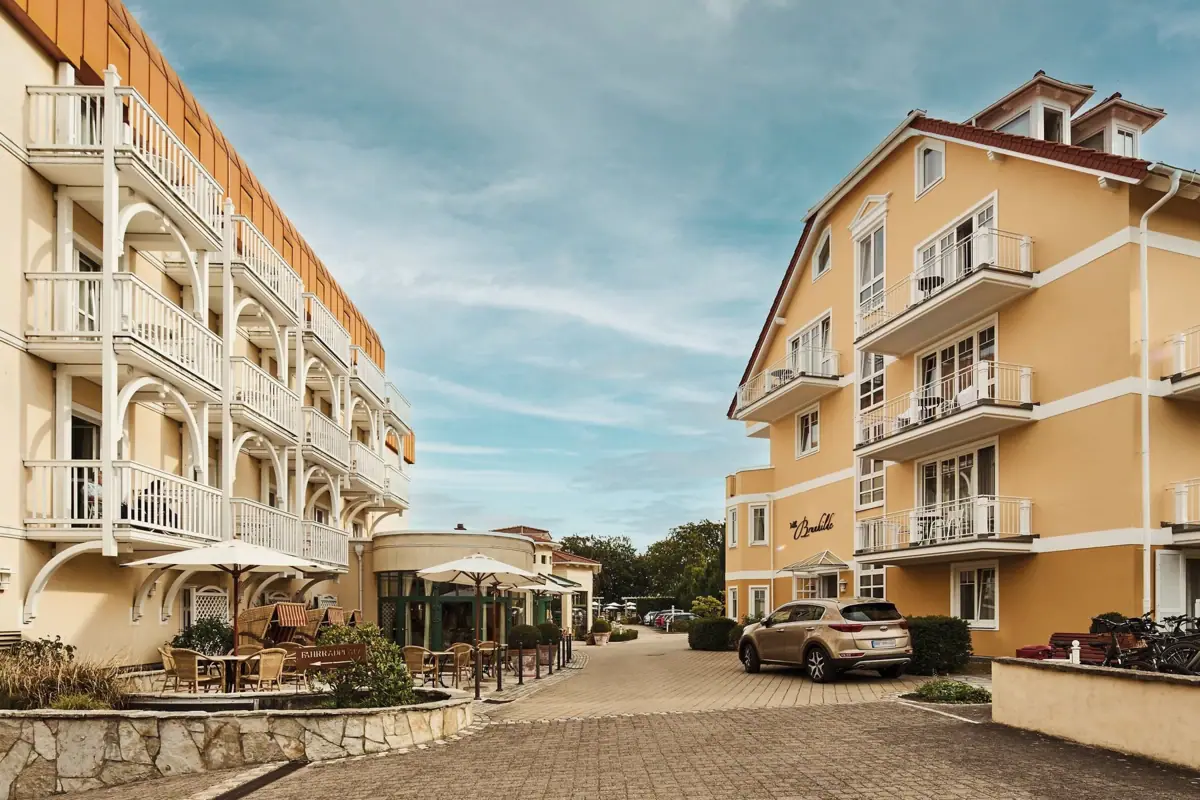
After an eventful day at Cape Arkona, pure relaxation awaits you at the aja Nordperd & Villen Göhren.
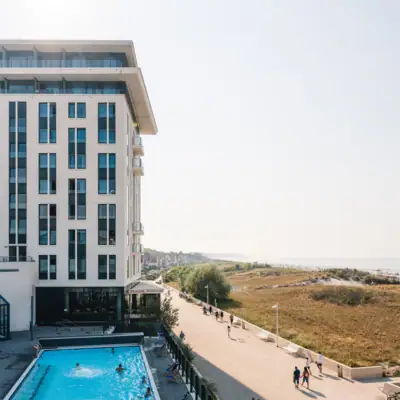
Dream location on Göhrens Hochufer - with direct access to the nature reserve & Nordstrand beach
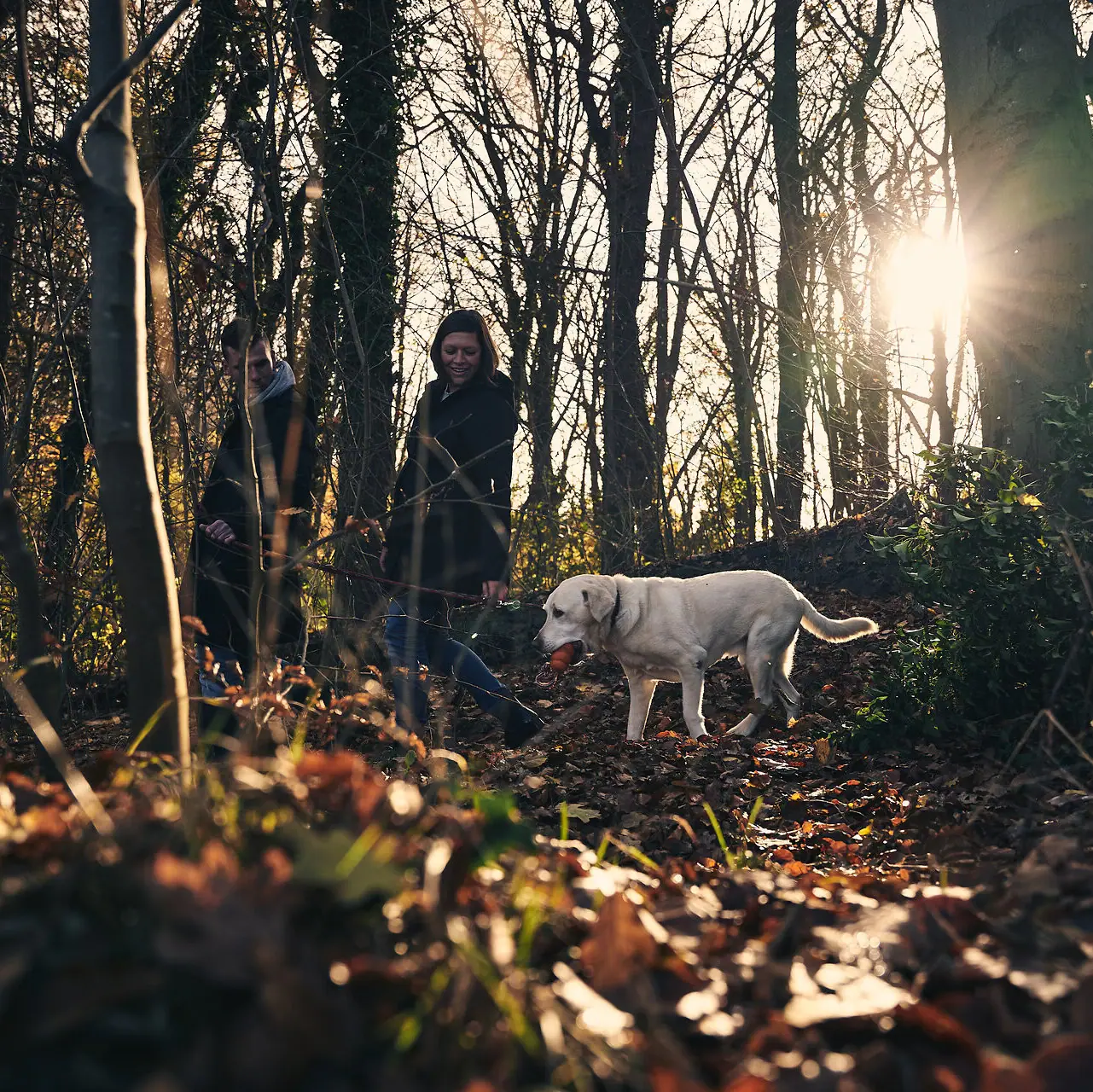
Dogs welcome (25 € / night)
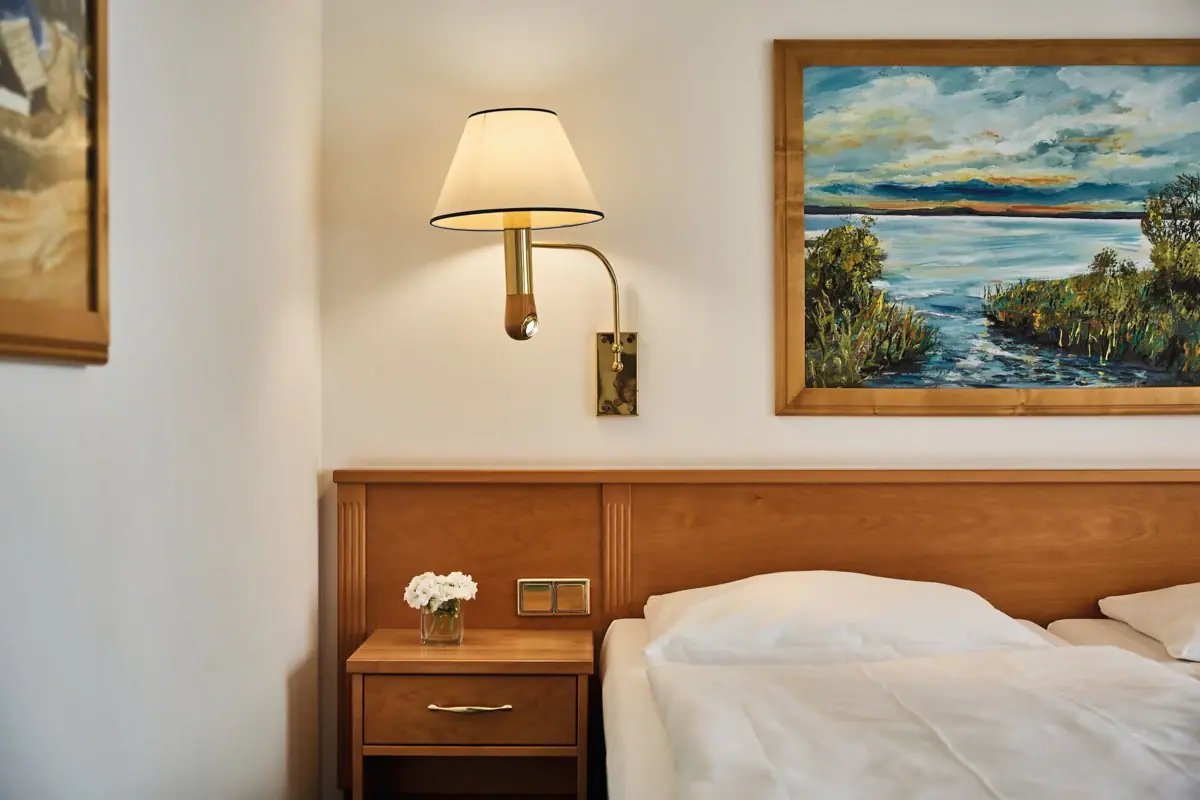
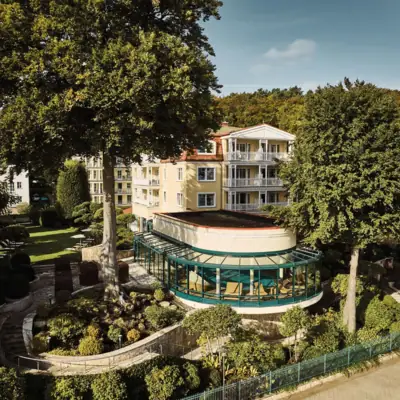
90 cosy rooms and suites in the main building and in the "Lo" & "Brunhilde" villas
Large wellness area with heated indoor pool
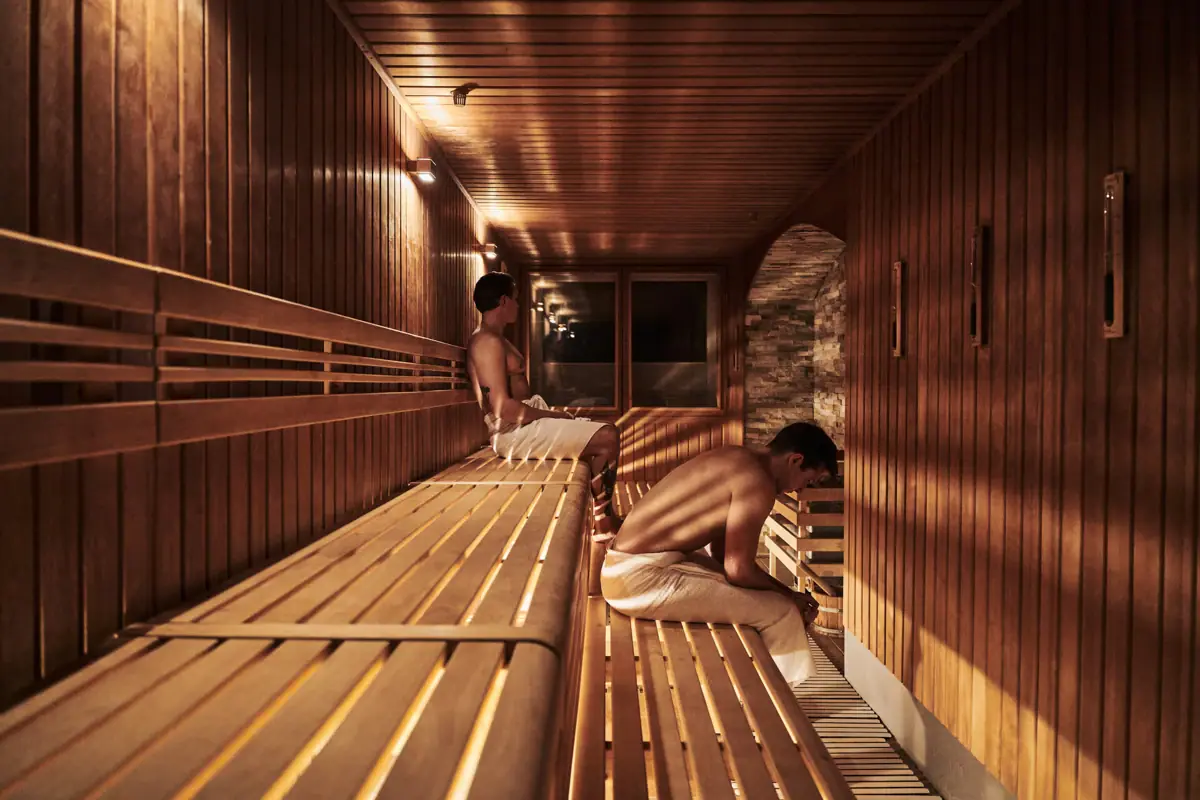
Sauna area with Baltic Sea view
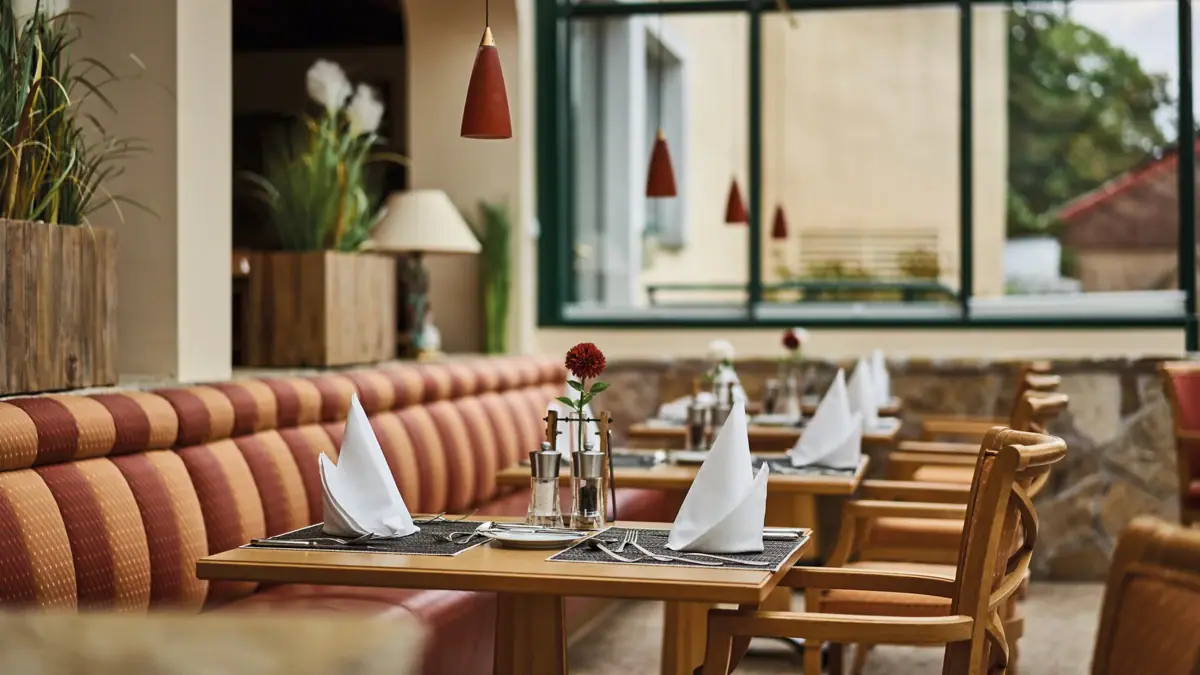
Restaurant, café & bar - for moments of pleasure from early to late

-400x400.webp)